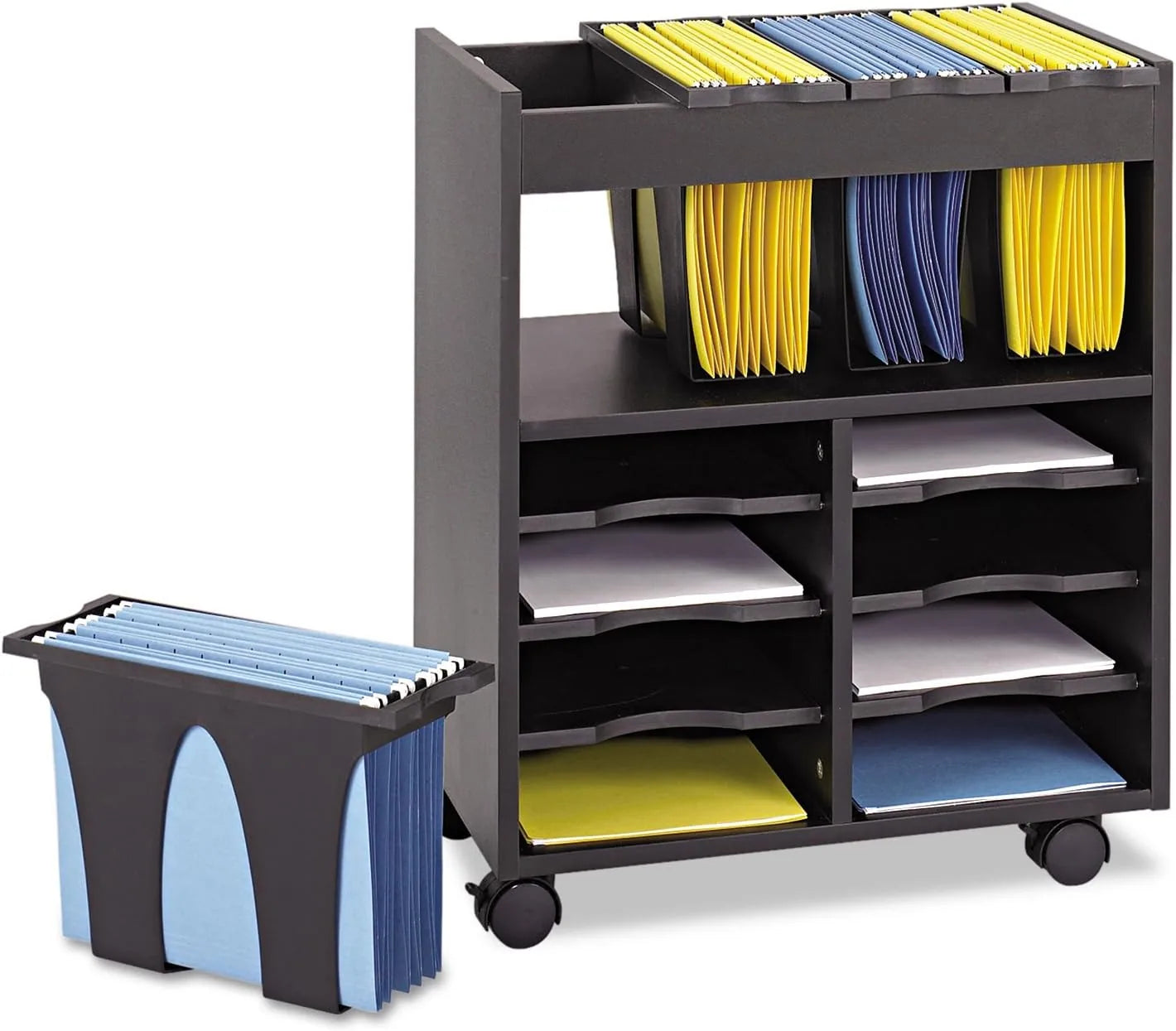
This guide explains how to choose and use a mobile file cart without adding more clutter to the office. It focuses on placement, file visibility, caster quality, shared use, and the small routines that keep paperwork moving.
A rolling file cart looks simple, but in a real office it solves several different problems at once: where active files live, how paper moves between people, how quickly a desk can be reset, and how safely records can travel without becoming a loose stack. For anyone comparing options, the practical starting point is the current LeStallion guide to the best rolling file carts for office mobility, then matching that shortlist to the way your workday actually moves.
The best cart is not always the largest one. It is the one that parks cleanly beside a desk, rolls without wobbling, carries folders at a comfortable height, and still feels tidy when the day gets busy. A cart that is too deep becomes a paper drawer on wheels. A cart that is too light rattles, tips, or gets ignored after a week.
For Caster, Handle, and Maintenance Checks, think in terms of route, load, and visibility. Route means the cart's normal path: desk to cabinet, meeting room to printer, or manager office to shared storage. Load means the mix of hanging folders, binders, supplies, and loose packets. Visibility means whether labels, color tabs, or open shelves help people find the right file quickly.
Editors usually look for three small details before trusting a cart: caster quality, handle position, and how the rails support full folders. Smooth casters matter because paper loads get heavy fast. A usable handle keeps hands away from folder edges. Strong rails prevent the annoying sag that makes files harder to pull and refile.
Mobility also changes behavior. When a cart has a defined home, staff are more likely to return folders after a task. When the top tray is intentionally reserved for active work, it can reduce desk piles. When the bottom shelf holds backup supplies only, the cart stops turning into a general junk catcher.
A good office setup treats the cart as a small workflow station, not just storage. Label the front, keep the most-used files at waist height, and leave enough clearance around the wheels so it can move without bumping chair legs or cable runs. These details are small, but they decide whether the cart improves the room or simply adds another object to manage.
Fit the cart to the actual paper flow
A rolling file cart looks simple, but in a real office it solves several different problems at once: where active files live, how paper moves between people, how quickly a desk can be reset, and how safely records can travel without becoming a loose stack. The practical starting point is to match the cart to the way your workday actually moves, not to buy the largest frame on the page.
The best cart is not always the largest one. It is the one that parks cleanly beside a desk, rolls without wobbling, carries folders at a comfortable height, and still feels tidy when the day gets busy. A cart that is too deep becomes a paper drawer on wheels. A cart that is too light rattles, tips, or gets ignored after a week.
For Fit the cart to the actual paper flow, think in terms of route, load, and visibility. Route means the cart's normal path: desk to cabinet, meeting room to printer, or manager office to shared storage. Load means the mix of hanging folders, binders, supplies, and loose packets. Visibility means whether labels, color tabs, or open shelves help people find the right file quickly.
Editors usually look for three small details before trusting a cart: caster quality, handle position, and how the rails support full folders. Smooth casters matter because paper loads get heavy fast. A usable handle keeps hands away from folder edges. Strong rails prevent the annoying sag that makes files harder to pull and refile.
Mobility also changes behavior. When a cart has a defined home, staff are more likely to return folders after a task. When the top tray is intentionally reserved for active work, it can reduce desk piles. When the bottom shelf holds backup supplies only, the cart stops turning into a general junk catcher.
A good office setup treats the cart as a small workflow station, not just storage. Label the front, keep the most-used files at waist height, and leave enough clearance around the wheels so it can move without bumping chair legs or cable runs. These details are small, but they decide whether the cart improves the room or simply adds another object to manage.
Choose rails and shelves that match your files
A rolling file cart looks simple, but in a real office it solves several different problems at once: where active files live, how paper moves between people, how quickly a desk can be reset, and how safely records can travel without becoming a loose stack. The practical starting point is to match the cart to the way your workday actually moves, not to buy the largest frame on the page.
The best cart is not always the largest one. It is the one that parks cleanly beside a desk, rolls without wobbling, carries folders at a comfortable height, and still feels tidy when the day gets busy. A cart that is too deep becomes a paper drawer on wheels. A cart that is too light rattles, tips, or gets ignored after a week.
For Choose rails and shelves that match your files, think in terms of route, load, and visibility. Route means the cart's normal path: desk to cabinet, meeting room to printer, or manager office to shared storage. Load means the mix of hanging folders, binders, supplies, and loose packets. Visibility means whether labels, color tabs, or open shelves help people find the right file quickly.
Editors usually look for three small details before trusting a cart: caster quality, handle position, and how the rails support full folders. Smooth casters matter because paper loads get heavy fast. A usable handle keeps hands away from folder edges. Strong rails prevent the annoying sag that makes files harder to pull and refile.
Mobility also changes behavior. When a cart has a defined home, staff are more likely to return folders after a task. When the top tray is intentionally reserved for active work, it can reduce desk piles. When the bottom shelf holds backup supplies only, the cart stops turning into a general junk catcher.
A good office setup treats the cart as a small workflow station, not just storage. Label the front, keep the most-used files at waist height, and leave enough clearance around the wheels so it can move without bumping chair legs or cable runs. These details are small, but they decide whether the cart improves the room or simply adds another object to manage.
Check casters before judging capacity
A rolling file cart looks simple, but in a real office it solves several different problems at once: where active files live, how paper moves between people, how quickly a desk can be reset, and how safely records can travel without becoming a loose stack. The practical starting point is to match the cart to the way your workday actually moves, not to buy the largest frame on the page.
The best cart is not always the largest one. It is the one that parks cleanly beside a desk, rolls without wobbling, carries folders at a comfortable height, and still feels tidy when the day gets busy. A cart that is too deep becomes a paper drawer on wheels. A cart that is too light rattles, tips, or gets ignored after a week.
For Check casters before judging capacity, think in terms of route, load, and visibility. Route means the cart's normal path: desk to cabinet, meeting room to printer, or manager office to shared storage. Load means the mix of hanging folders, binders, supplies, and loose packets. Visibility means whether labels, color tabs, or open shelves help people find the right file quickly.
Editors usually look for three small details before trusting a cart: caster quality, handle position, and how the rails support full folders. Smooth casters matter because paper loads get heavy fast. A usable handle keeps hands away from folder edges. Strong rails prevent the annoying sag that makes files harder to pull and refile.
Mobility also changes behavior. When a cart has a defined home, staff are more likely to return folders after a task. When the top tray is intentionally reserved for active work, it can reduce desk piles. When the bottom shelf holds backup supplies only, the cart stops turning into a general junk catcher.
A good office setup treats the cart as a small workflow station, not just storage. Label the front, keep the most-used files at waist height, and leave enough clearance around the wheels so it can move without bumping chair legs or cable runs. These details are small, but they decide whether the cart improves the room or simply adds another object to manage.
Keep the top zone for active work only
A rolling file cart looks simple, but in a real office it solves several different problems at once: where active files live, how paper moves between people, how quickly a desk can be reset, and how safely records can travel without becoming a loose stack. The practical starting point is to match the cart to the way your workday actually moves, not to buy the largest frame on the page.
The best cart is not always the largest one. It is the one that parks cleanly beside a desk, rolls without wobbling, carries folders at a comfortable height, and still feels tidy when the day gets busy. A cart that is too deep becomes a paper drawer on wheels. A cart that is too light rattles, tips, or gets ignored after a week.
For Keep the top zone for active work only, think in terms of route, load, and visibility. Route means the cart's normal path: desk to cabinet, meeting room to printer, or manager office to shared storage. Load means the mix of hanging folders, binders, supplies, and loose packets. Visibility means whether labels, color tabs, or open shelves help people find the right file quickly.
Editors usually look for three small details before trusting a cart: caster quality, handle position, and how the rails support full folders. Smooth casters matter because paper loads get heavy fast. A usable handle keeps hands away from folder edges. Strong rails prevent the annoying sag that makes files harder to pull and refile.
Mobility also changes behavior. When a cart has a defined home, staff are more likely to return folders after a task. When the top tray is intentionally reserved for active work, it can reduce desk piles. When the bottom shelf holds backup supplies only, the cart stops turning into a general junk catcher.
A good office setup treats the cart as a small workflow station, not just storage. Label the front, keep the most-used files at waist height, and leave enough clearance around the wheels so it can move without bumping chair legs or cable runs. These details are small, but they decide whether the cart improves the room or simply adds another object to manage.
Use labels people can read while standing
A rolling file cart looks simple, but in a real office it solves several different problems at once: where active files live, how paper moves between people, how quickly a desk can be reset, and how safely records can travel without becoming a loose stack. The practical starting point is to match the cart to the way your workday actually moves, not to buy the largest frame on the page.
The best cart is not always the largest one. It is the one that parks cleanly beside a desk, rolls without wobbling, carries folders at a comfortable height, and still feels tidy when the day gets busy. A cart that is too deep becomes a paper drawer on wheels. A cart that is too light rattles, tips, or gets ignored after a week.
For Use labels people can read while standing, think in terms of route, load, and visibility. Route means the cart's normal path: desk to cabinet, meeting room to printer, or manager office to shared storage. Load means the mix of hanging folders, binders, supplies, and loose packets. Visibility means whether labels, color tabs, or open shelves help people find the right file quickly.
Editors usually look for three small details before trusting a cart: caster quality, handle position, and how the rails support full folders. Smooth casters matter because paper loads get heavy fast. A usable handle keeps hands away from folder edges. Strong rails prevent the annoying sag that makes files harder to pull and refile.
Mobility also changes behavior. When a cart has a defined home, staff are more likely to return folders after a task. When the top tray is intentionally reserved for active work, it can reduce desk piles. When the bottom shelf holds backup supplies only, the cart stops turning into a general junk catcher.
A good office setup treats the cart as a small workflow station, not just storage. Label the front, keep the most-used files at waist height, and leave enough clearance around the wheels so it can move without bumping chair legs or cable runs. These details are small, but they decide whether the cart improves the room or simply adds another object to manage.
Plan a parking spot before buying
A rolling file cart looks simple, but in a real office it solves several different problems at once: where active files live, how paper moves between people, how quickly a desk can be reset, and how safely records can travel without becoming a loose stack. The practical starting point is to match the cart to the way your workday actually moves, not to buy the largest frame on the page.
The best cart is not always the largest one. It is the one that parks cleanly beside a desk, rolls without wobbling, carries folders at a comfortable height, and still feels tidy when the day gets busy. A cart that is too deep becomes a paper drawer on wheels. A cart that is too light rattles, tips, or gets ignored after a week.
For Plan a parking spot before buying, think in terms of route, load, and visibility. Route means the cart's normal path: desk to cabinet, meeting room to printer, or manager office to shared storage. Load means the mix of hanging folders, binders, supplies, and loose packets. Visibility means whether labels, color tabs, or open shelves help people find the right file quickly.
Editors usually look for three small details before trusting a cart: caster quality, handle position, and how the rails support full folders. Smooth casters matter because paper loads get heavy fast. A usable handle keeps hands away from folder edges. Strong rails prevent the annoying sag that makes files harder to pull and refile.
Mobility also changes behavior. When a cart has a defined home, staff are more likely to return folders after a task. When the top tray is intentionally reserved for active work, it can reduce desk piles. When the bottom shelf holds backup supplies only, the cart stops turning into a general junk catcher.
A good office setup treats the cart as a small workflow station, not just storage. Label the front, keep the most-used files at waist height, and leave enough clearance around the wheels so it can move without bumping chair legs or cable runs. These details are small, but they decide whether the cart improves the room or simply adds another object to manage.
Maintenance notes that prevent wobble
A rolling file cart looks simple, but in a real office it solves several different problems at once: where active files live, how paper moves between people, how quickly a desk can be reset, and how safely records can travel without becoming a loose stack. The practical starting point is to match the cart to the way your workday actually moves, not to buy the largest frame on the page.
The best cart is not always the largest one. It is the one that parks cleanly beside a desk, rolls without wobbling, carries folders at a comfortable height, and still feels tidy when the day gets busy. A cart that is too deep becomes a paper drawer on wheels. A cart that is too light rattles, tips, or gets ignored after a week.
For Maintenance notes that prevent wobble, think in terms of route, load, and visibility. Route means the cart's normal path: desk to cabinet, meeting room to printer, or manager office to shared storage. Load means the mix of hanging folders, binders, supplies, and loose packets. Visibility means whether labels, color tabs, or open shelves help people find the right file quickly.
Editors usually look for three small details before trusting a cart: caster quality, handle position, and how the rails support full folders. Smooth casters matter because paper loads get heavy fast. A usable handle keeps hands away from folder edges. Strong rails prevent the annoying sag that makes files harder to pull and refile.
Mobility also changes behavior. When a cart has a defined home, staff are more likely to return folders after a task. When the top tray is intentionally reserved for active work, it can reduce desk piles. When the bottom shelf holds backup supplies only, the cart stops turning into a general junk catcher.
A good office setup treats the cart as a small workflow station, not just storage. Label the front, keep the most-used files at waist height, and leave enough clearance around the wheels so it can move without bumping chair legs or cable runs. These details are small, but they decide whether the cart improves the room or simply adds another object to manage.
Editorial buying checklist
A rolling file cart looks simple, but in a real office it solves several different problems at once: where active files live, how paper moves between people, how quickly a desk can be reset, and how safely records can travel without becoming a loose stack. The practical starting point is to match the cart to the way your workday actually moves, not to buy the largest frame on the page.
The best cart is not always the largest one. It is the one that parks cleanly beside a desk, rolls without wobbling, carries folders at a comfortable height, and still feels tidy when the day gets busy. A cart that is too deep becomes a paper drawer on wheels. A cart that is too light rattles, tips, or gets ignored after a week.
For Editorial buying checklist, think in terms of route, load, and visibility. Route means the cart's normal path: desk to cabinet, meeting room to printer, or manager office to shared storage. Load means the mix of hanging folders, binders, supplies, and loose packets. Visibility means whether labels, color tabs, or open shelves help people find the right file quickly.
Editors usually look for three small details before trusting a cart: caster quality, handle position, and how the rails support full folders. Smooth casters matter because paper loads get heavy fast. A usable handle keeps hands away from folder edges. Strong rails prevent the annoying sag that makes files harder to pull and refile.
Mobility also changes behavior. When a cart has a defined home, staff are more likely to return folders after a task. When the top tray is intentionally reserved for active work, it can reduce desk piles. When the bottom shelf holds backup supplies only, the cart stops turning into a general junk catcher.
A good office setup treats the cart as a small workflow station, not just storage. Label the front, keep the most-used files at waist height, and leave enough clearance around the wheels so it can move without bumping chair legs or cable runs. These details are small, but they decide whether the cart improves the room or simply adds another object to manage.
Related reading
For the previous office-organization build, see the drawer organizer cluster at desktop drawer organizers for small items. If you are still comparing cart styles, return to LeStallion's rolling file cart recommendations for mobile office storage before deciding.
FAQ
Are open file carts better than closed carts?
Open carts are faster for active files, while closed carts are better when dust, privacy, or visual neatness matters more.
How many drawers should a rolling file cart have?
Most desks do well with one file zone and one supply zone. More drawers help only if each has a clear purpose.
Do casters matter on carpet?
Yes. Wider, smoother casters roll more predictably and reduce tipping when the cart is loaded.
Should a cart lock?
Choose a lock if the cart holds sensitive papers, but do not rely on a small cart lock for high-security records.
Where should the cart park?
Park it within reach but outside knee space, drawer paths, and main walking routes.